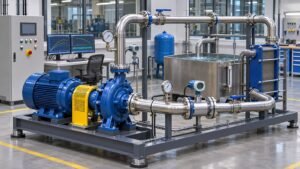
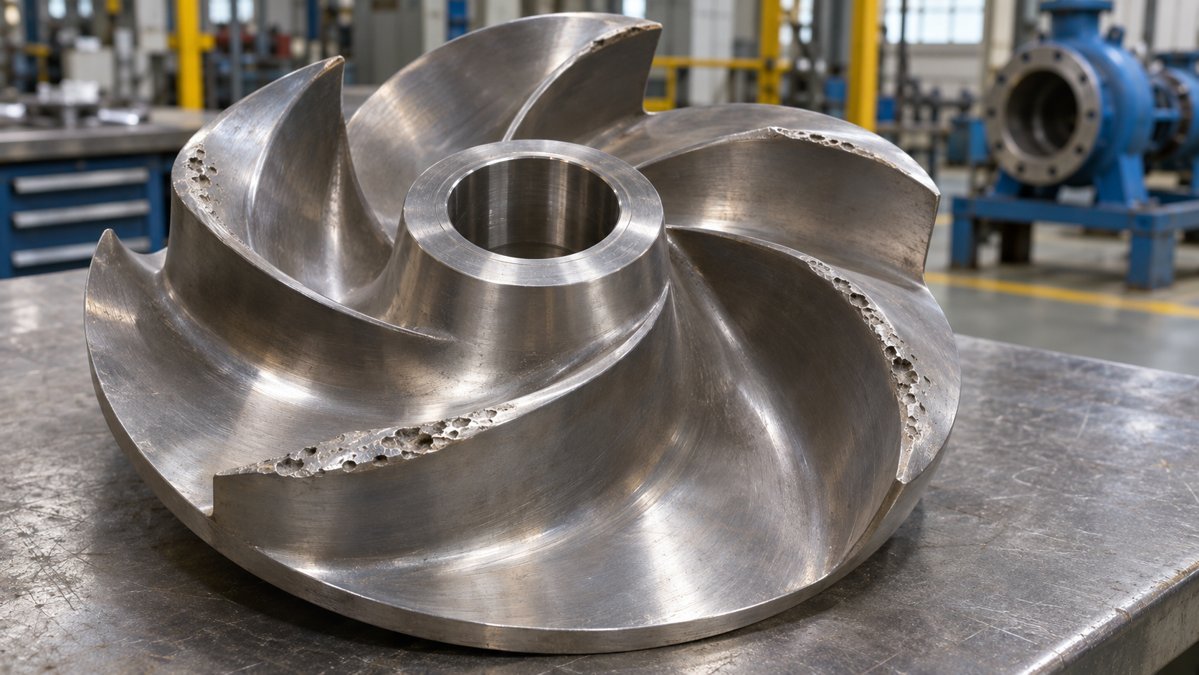
Pump cavitation occurs when local pressure falls low enough for vapor bubbles to form in the liquid. When those bubbles move into a higher-pressure region, they collapse. In a centrifugal pump, repeated collapse can contribute to noise, vibration, and damage to the impeller.
What does pump cavitation sound like?
Operators often describe a crackling or gravel-like sound. A drop in developed head, fluctuating flow or pressure, and localized impeller pitting may also accompany cavitation. Similar noise or vibration can come from entrained air, recirculation, or mechanical problems. Treat the sound as a clue and compare it with operating measurements.
What causes cavitation in a centrifugal pump?
- Low suction tank level: Less liquid above the pump inlet can reduce the pressure available at suction.
- Higher suction losses: A plugged strainer, restricted valve, or undersized suction line can increase pressure loss before the pump.
- Higher liquid temperature: An increase in vapor pressure can reduce the available suction margin.
- A change in flow or speed: The pump may operate at a point with greater suction requirements than at its original duty.
See the U.S. Department of Energy pumping systems sourcebook for more on suction pressure and cavitation.
What to check before replacing the pump
- Record the flow, pump speed, liquid temperature, suction pressure, and tank level while the symptom occurs. Compare those readings with a normal run if available.
- Compare the measured duty with the pump curve for the installed speed and impeller. Check the minimum tank level and maximum expected liquid temperature when assessing suction margin.
- Use the supplier’s curve and service-specific guidance to compare available NPSH with the required value and margin. Velotech’s NPSH available vs. required checklist explains what to gather.
- Have qualified maintenance personnel follow site isolation procedures before opening a strainer or inspecting the impeller. Compare inspection findings with the operating data before deciding whether to alter the system or replace equipment.
How to distinguish cavitation from an operating-point problem
If the sound appears only during high flow, low tank level, or warm liquid service, investigate changes in suction margin. If it appears at very low flow, also check the manufacturer’s minimum-flow guidance and consider internal recirculation. Compare the expected behavior with the Hydraulic Institute’s guide to operating regions and Velotech’s guide to one-pump and two-pump operation when the symptom changes as pumps start or stop.
For a worked example of reading flow, head, efficiency, and power, see how to read a centrifugal pump curve.